
The Estrogen Patch Influencers Are Here
#PostYourPatch: raising awareness and profits at the same time?
Hello!
Thank you for such great feedback after my first week. I appreciate everyone’s support so much, and I’m excited to dig into my long list of story ideas.
This week, I’m writing about a trend for the menopause set that’s starting to bubble up on social media. Yes, it’s about awareness — but, shocker, it’s also about selling stuff, my favorite theme. Then, at the end, find some reads about peptides, wigs, and “letting yourself go.” (I would like to let myself go somewhere tropical because I am extremely tired of winter.)
**Due to length, you may need to read this email in your browser. I never use affiliate links, but I do sometimes receive products for free because of my job, which I’ll note when applicable. Liking, commenting on, and sharing this newsletter really helps people discover it, which helps ME. Thank you!
Stuck On You
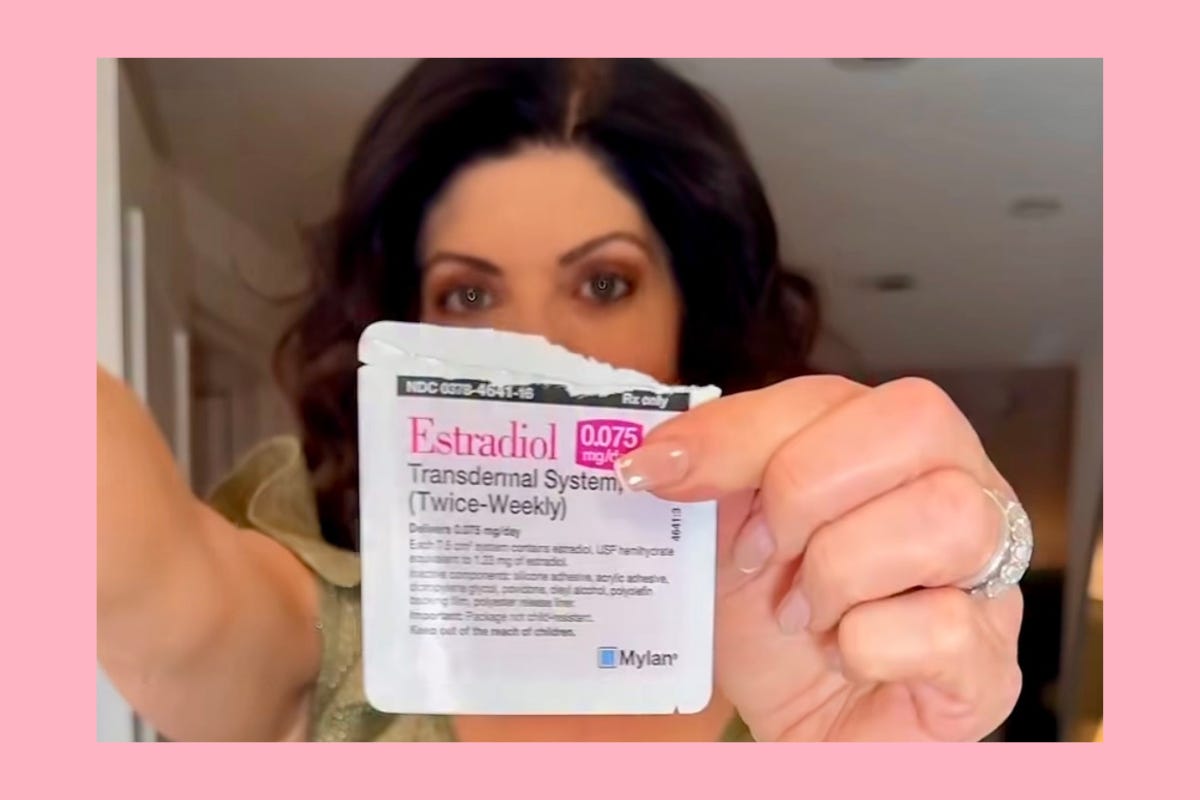
I’m not sure what kind of incentive I’d need to convince me to expose the expanse of abdomen between my belly button and pubic bones on social media. But increasingly, more women are doing just this — to show us where they stick their estrogen patches.
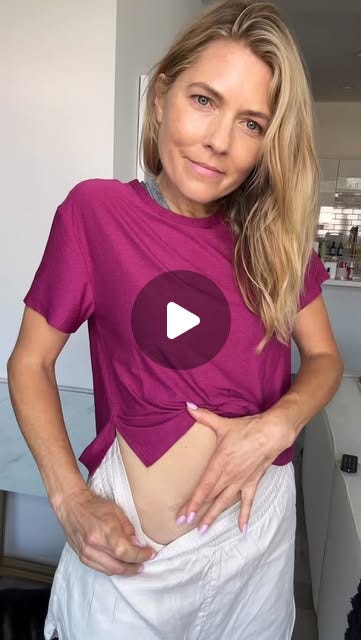
The nascent #PostYourPatch movement is meant to be an awareness campaign to normalize talking about symptom management for menopause and decrease shame and stigma around it. Tamsen Fadal, a former matchmaker and local TV journalist, menopause book author, and the most visible non-doctor member of the “menoposse,” started it last year. She’s encouraging women to show off their estrogen patches online. (Halle Berry, who owns a menopause care company called Re-spin and sells vaginal red light therapy devices, is one of the people who obliged.)
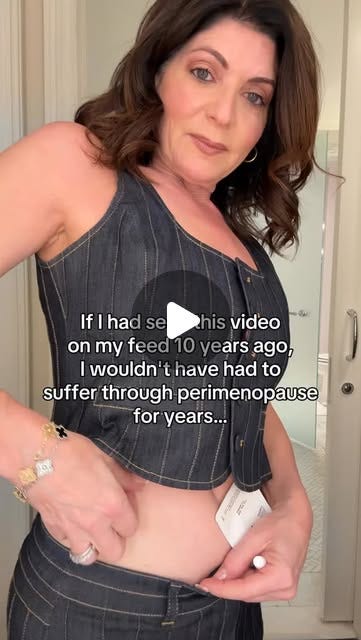
So should we all be running around showing off our prescription hormones like a bunch of Kardashians with a fresh Brazilian wax? The menopause awareness and education we’ve seen over the last five years has been a positive thing for society. But like so, SO many things on social media, once it gets a life online, it can become a little … one-dimensional. Stoking FOMO for prescription hormones like they’re the hottest new handbag from The Row gets (haha) sticky.
In the last five years, we have seen the most meaningful shift in menopause care in decades. In the early 2000s, a study called the Women’s Health Initiative (WHI) published findings suggesting that hormone replacement therapy (HRT) could increase the risk for breast cancer, stroke, and heart disease. It was sensationalized in the media, and hormone use tanked.
The study had “critical methodological flaws,” and follow-up studies suggest that hormone therapy can be safe and effective. But there are still some unknowns, and not everyone is a candidate. Plus, the sudden spotlight on a white space in our capitalist healthcare system, where there is still a lot of confusion around menopause, gave rise to a whole bunch of new entities that want to sell us questionable products:

Estrogen FOMO
In hindsight, my bad perimenopause symptoms started early in the pandemic. But so many things were assaulting my system then, and, even as a person who worked as a nurse for almost 20 years, I didn’t have the knowledge to recognize what was happening. So, I just drank too much wine to cope.
I don’t even know when I first noticed it, but suddenly doctors like Kelly Casperson and Mary Claire Haver were all over my feed, and then regular women I followed started evangelizing about estrogen. Everyone was shouting, “GET SOME HORMONES.” (It felt much more stressful than Jessica Tandy doing it in Fried Green Tomatoes, pre-WHI study):
A poster in the GenXWomen subreddit recently recounted a similar experience, referring to Dr. Haver: “She makes me feel like I will die a long and cruel death if I don’t take HRT.” Yes! I was convinced my bones would immediately crumble into a heap of dust thanks to osteoporosis if I didn’t get on estrogen immediately. (I’m now on progesterone pills and an estrogen patch, which I’m not going to show you.)
While HRT is safer than we previously thought, it’s still a prescription medication that affects your whole body, and it’s not appropriate for everyone to take. People online sometimes over-promise its positive effects, especially on dementia and cardiovascular health. There is definitely a sense of peer pressure if you’re not on it.
This is all happening in the middle of an estrogen patch shortage. The FDA removed a black box warning, an indication of the risk of death or serious adverse effects, from estrogen products last year. That, plus the increase in both awareness and women-focused telehealth companies to meet the need, have probably contributed to the shortfall. “A spokesperson for the FDA said the agency is monitoring the supply of estradiol patches,” notes NBC News. (It’s gonna be fine, everyone. RFK Jr. is on it!)
Branding Menopause
Companies like Elektra and Midi Health, which just announced a $1 billion valuation, are taking advantage of the lack of good menopause care in the current US medical system. They make it easy to see a provider online and to get medications, which insurance usually covers. This is a good thing! But here’s where we get to the “both things can be true” section.
Midi doesn’t sell estrogen patches directly. But it still has a lot of investors who want to see a return, so it needs to bring in as many patients as possible. Fadal is an investor. So while it’s great that she’s smashing patch stigmas, it’s also great for her if people go to Midi to get patches prescribed.
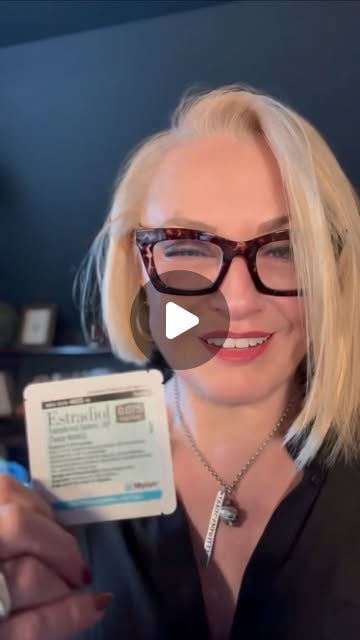
Midi hasn’t paid influencers to specifically #PostYourPatch, but people like body acceptance influencer Katie Sturino, former “Real Housewife” Bethenny Frankel, and one of my favorite Peloton instructors (love her New Wave playlists), Christine D’Ercole, have all done sponcon for Midi. D’Ercole waves around her patch while saying how important it is to not forget to change it.
While patch posting is still pretty niche, I predict it’s only going to get more popular. About a third of millennials, the generation that invented the selfie, are over 40 now and are starting to experience perimenopause. So there’s a larger audience than ever.
One woman on TikTok said she had #PostYourPatch FOMO, so instead she posted her “Winona estrogen cream.” What struck me was her mentioning the brand name of the cream. That’s like saying, “I took my Pfizer penicillin.” Winona sells compounded medications online. Its estrogen patch is $149; my generic FDA-approved one is $0 with insurance. (Obviously many people who are un- and underinsured need to pay for these out-of-pocket.)
The Midi CEO posted her patch on TikTok recently and said she wished they could be in fun shapes, like tattoos. Aesthetically-pleasing patches are coming, mark my words. There’s a shortage, which means demand is high. It’s the perfect time for someone to get in there and become the Estée Lauder of Éstrogen. A company is now selling Instagram-friendly hemorrhoid cream, so why not something you stick on your body twice a week?
I endorse this specific vision:
Imagine all the fragrance crossovers there could be. Visible branding is already happening on undereye gel patches, and Starface made acne stickers whimsical1. Chanel makes cotton pads embossed with the double-C, so why not designer hormones? Think of how it would increase shareholder value.
Good For Your Age is a newsletter that analyzes and reports on the beauty industry, aging narratives, and questionable wellness trends (with a side of nostalgia and pop culture) through a Gen X lens. But keep reading, there’s more…

I cannot get behind this shopping story about how to get Carolyn Bessette Kennedy’s tiny ‘90s oval sunglasses look. I’m sorry, but give me the giant ones from the ‘70s and early ‘80s that cover my whole face. [Byrdie]
This podcast episode about research peptides (those unregulated “longevity” shots with names like “Barbie” and “Wolverine”) is fantastic. Mostly it confirmed my original instinct that taking shots that haven’t been studied, which you buy from some rando on the internet, is bad. [Glossy Beauty Podcast]
Someone is selling a necklace, which is actually not bad looking, that purports to help you cool off during a hot flash. The website is very mysterious, though. I wanted to find a price, but it goes to an error page when you hit “preorder.” And nowhere does it tell you how the thing works. Color me intrigued/skeptical. (H/t to Hotflash Inc, where I first saw it mentioned.) [Talihea]
There’s a big CBD ban coming. The hemp-derived ingredient often contains variable quantities of THC, the chemical that can get you high. Studies on the efficacy of the compound are generally “uneven,” according to the story. (The article didn’t mention its use in perimenopause, but a lot of people try it for their symptoms.)[NYT]
Loved this article about wigs. [The Cut]
“I Was Kind of Looking Forward to Letting Myself Go in my 50s” is the headline on this op-ed by longtime beauty writer Danielle Pergamet, about the changing societal goalposts for aging. [Allure]
Thanks for reading, and see you next week!
Here in Ireland we get HRT for free. It’s through your GP so it’s been a great thing for women here. It is awful how necessary medications are not free in other countries
you mean I could have made some sponcon coin from baring my meno belly in this week’s substack post? 🫠